Oware game board

Artifact Featurettes

Every so often, in a variety of formats, the Museum examines an artifact from a past society on the Museum social media pages. You can view some of our past "Artifact Features" here. Stay tuned to our social media for additional pictures and museum happenings.


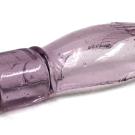
September 3, 2015: Phillipine Fire Piston

Artifact of the Week: Fire Piston

Cabanatuan, Luzon, Philippines
Collected in WWII by Dr. Earnest Head, Agricultural Engineering, UC Davis

This fire piston, made from horn, was collected by former UC Davis professor Earnest Head, from the Agriculture Engineering Department during World War II and later donated to the museum. According to Dr. Head, it was used to light cigarettes and originally came with kapok tinder. The indentation on the side of the exterior chamber was used to hold wax, which was used to grease the tape piston.

August 27, 2015: Muskrat Skin Pouch

Artifact of the Week: Muskrat Skin Pouch

41 x 11.5 cm (without attachments)
Collected by C.H. Merriam. Possibly Northern Plains in origin.

“Oh. Wow. That’s an interesting…bag you got there?”

Why thank you. This skin pouch is made from a muskrat skin. An entire muskrat skin. Collected by Clinton Hart Merriam, his description of the artifact reads as follows:

August 20, 2015: Naylamp Effigy Vessel

Lambayeque, Peru
Middle Horizon to Late Intermediate 800 CE - 1370 CE
12 x 15 x 18 cm

Ceramics of the Sicán civilization, sometimes called the Labayeque after the modern region they lived in, possessed a distinctive style, representing a rich history and ideology. Spouted vessels, such as this one, are often adorned with the image of what many anthropologists have called the Sicán Deity or the legendary hero Naylamp.

August 14, 2015: Geta

Karankoron karankoron karankoron. The sound of geta in motion. Cicadas call the last days of summer. It is a sound from Old Japan, simple and sweet. Beautiful in the way an every-day sort of sound becomes not-so-everyday.

August 6, 2015: Southern Sierra Miwok Too-poo-lah

This exquisite Southern Sierra Miwok basket was purchased by C. Hart Merriam September 19, 1902 at a Chowchilla camp in Chowchilla Canyon from the woman who made it.

Merriam, one of California's leading ethnographers, was deeply interested in preserving the native languages of California during the early part of the twentieth century. In addition to recording extensive vocabularies, he made an effort to learn and record the native words for the baskets he purchased or was given by the people he had met.

In Merriam's own words:

July 31, 2015: Soaproot Brushes

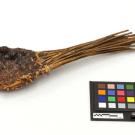
These soaproot brushes were collected by Clinton Hart Merriam on his travels through California in the early 20th century. Soaproot, Chlorogalum sp., has elongated underground bulbs surrounded by tough fibers. These fibers are used to make brushes like the ones seen here.

July 23, 2015: Casarones Composite

The ruins of Caserones, a prehistoric village occupied intermittently from around 300 B.C.E to around 1100 CE, sits high in the Chilean altiplano (high elevation plain). Built along a ravine with a river to provide irrigation for the agriculturalists occupants, the surrounding region is highly arid, making for great preservation.

July 16, 2015: Tachi Yokuts Waterbottle

Tulare Lake, California
Basket purchased June 5, 1903 by Clinton Hart Merriam
Diameter: 195 mm; Height: 250 mm

Clinton Hart Merriam describes this basket as:

“Ah’ts (or Ah’ch) Waterbottle
Purchased by me from an old Tahche [woman] living in a tule hut, at the remains of a Tahche settlement 7 miles southeast of Lemoore, near Tulare Lake, California. June 5, 1903.”

July 9, 2015: Miniature Mortar

A note left with this artifact indicates that, according to former UC Davis professor D.L. True, miniature mortars such as this were given to children and kept for life. In fact, miniatures of many of the tools used by adults were made as toys for children, often reflecting vocational outcomes.